


Expanding into the European market
Are you currently facing any of these challenges?
Planning to store goods in Europe?
Buyer reluctant to clear import / pay import VAT?
Customers requesting DDP?
Confused by EORI and VAT regulations?
Unsure about import and VAT filing procedures?
Unsure about VAT refunds or deferral rules?
Facing challenges with e-commerce compliance?
Maybe we can help — let's figure it out together.


What does VAT have to do with logistics?
In the EU, logistics and VAT are closely intertwined.
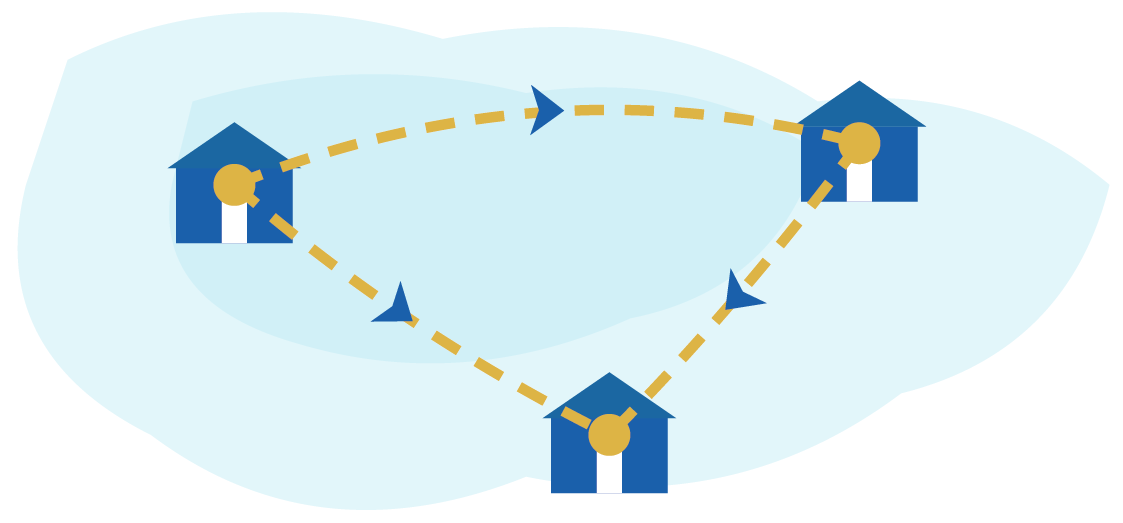
The European logistics chain often determines your VAT compliance structure.
Incoterms determine who bears the import VAT
Customs documentation affects VAT filing compliance
Storage location drives VAT obligations
Shipping routes determine applicable VAT rates
Every logistics decision carries a VAT consequence. The smartest move is to plan your logistics and VAT compliance together — before the first shipment leaves.


VAT (Value Added Tax) is ultimately borne by the end consumer.
For businesses, VAT is neither revenue nor a cost:
VAT paid on purchases:
In general fully deductible or refundable — no impact on business cost
VAT collected on sales:
Must be remitted to the tax authority via VAT return — not counted as business revenue
Is VAT unified across the EU?
The EU has a harmonized VAT framework, but each member state maintains its own specific VAT regulations and operational rules within that framework. In other words, VAT registration and filing are country-based — not EU-wide.

So, which EU country should be your gateway into the EU market?
Consider the Netherlands as your gateway to the EU market.
With transparent tax rules, a highly efficient customs system, and a well-established import VAT deferment regime (Article 23), the Netherlands has become a key strategic gateway for non-EU companies entering the European market — enabling businesses to import goods without immediate VAT payment, settling import VAT through periodic VAT returns in a fully compliant manner.
With the Netherlands as the country of import, businesses can benefit from:
Import clearance:
VAT deferment under the Article 23 license — no import VAT paid to customs at entry; instead deferred and reported in the VAT return.
Sales to Dutch-established businesses:
VAT reverse charge applies — VAT is accounted for by the buyer; no VAT charged to the buyer.
Sales to other EU businesses:
Zero-rated (subject to intra-community supply conditions) — no VAT charged to the buyer.
Sales to non-EU buyers:
Zero-rated as exports (subject to retaining export evidence) — no VAT charged to the buyer.
The right country of import, the right warehouse, the right shipping route — getting VAT compliance right feels like a lot.
Does VAT compliance really matter?
Absolutely. Compliance is the baseline for any cross-border business to operate sustainably.
Failure to file correctly, underreporting, or evading tax obligations can expose your business to heavy fines, VAT number cancellation, tax authority blacklisting — and even the loss of the right to operate within the EU.
How to get started and stay compliant — without crossing EU regulatory lines?
In fact, none of this needs to be complicated. What you're missing is simply professional, accountable, and localized support.
From VAT management to logistics coordination, Augmar will provide you with complete and reliable on-the-ground support in the EU.

Free initial consultation